Explore Our Solar System Through Data
Understanding the planets not just by name, but by measurable facts from size and mass to gravity and density. This page breaks down the solar system in a clear, data-driven way.
- 8Planets
- 5Key metrics
- 1Solar system
How planetary data help us understand space
Planetary science goes beyond image. Comparing mass, diameter, gravity, and density helps us understand how planets form, behave, and interact within the solar system.
Visualizing the difference between planets
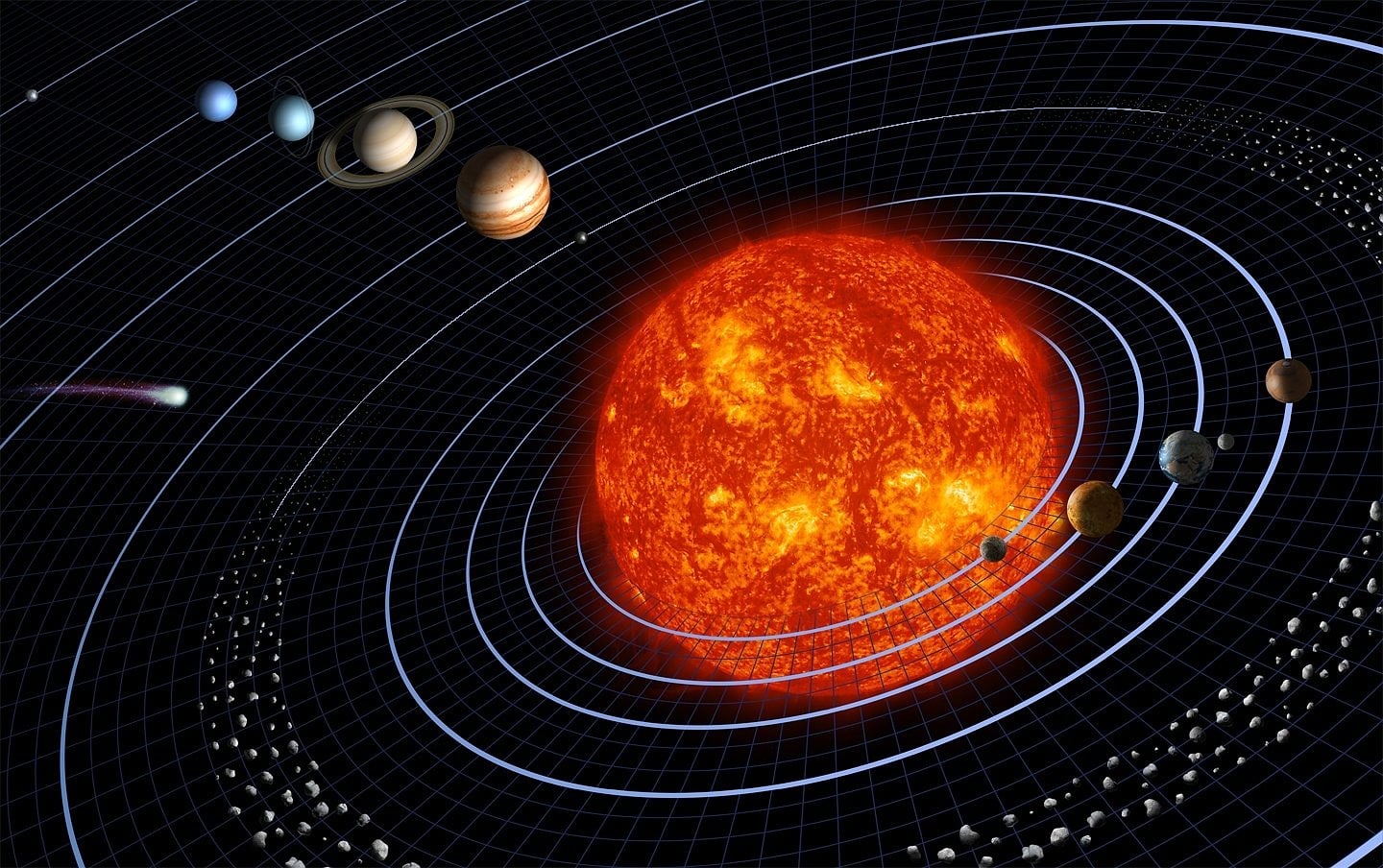
Rocky planets with solid surfaces, such as Earth and Mars.
Large, massive worlds like Jupiter and Saturn with thick atmospheres.
Cold, distant planets with icy compositions and unique weather systems.
Planetary facts at a glance
Below is a comparative table of major planets in our solar system. The data highlight key physical properties used by astronomers and researchers worldwide.
| name | Mass (10²⁴ kg) | Diameter (km) | Density (g/cm³) | Gravity (m/s²) | ||
|---|---|---|---|---|---|---|
| Terrestrial planets | Mercury | 0.330 | 4,879 | 5427 | 3.7 | |
| Venus | 4.87 | 12,104 | 5243 | 8.9 | ||
| Earth | 5.97 | 12,742 | 5514 | 9.8 | ||
| Mars | 0.642 | 6,779 | 3933 | 3.7 | ||
| Jovain palnet | Gas giants | Jupiter | 1,898 | 139,820 | 1326 | 24.8 |
| Saturn | 568 | 116,460 | 687 | 10.4 | ||
| Ice giants | Uranus | 86.8 | 50,724 | 1271 | 8.7 | |
| Neptune | 102 | 49,244 | 1638 | 11.2 | ||
| Dwarf planets | Pluto | 0.013 | 2,377 | 2095 | 0.6 | |
Have questions about planetary science?
Have interest in learning more about space, astronomy, or how planetary data is collected and analyzed? Reach out to us and we will be happy to answer your questions.